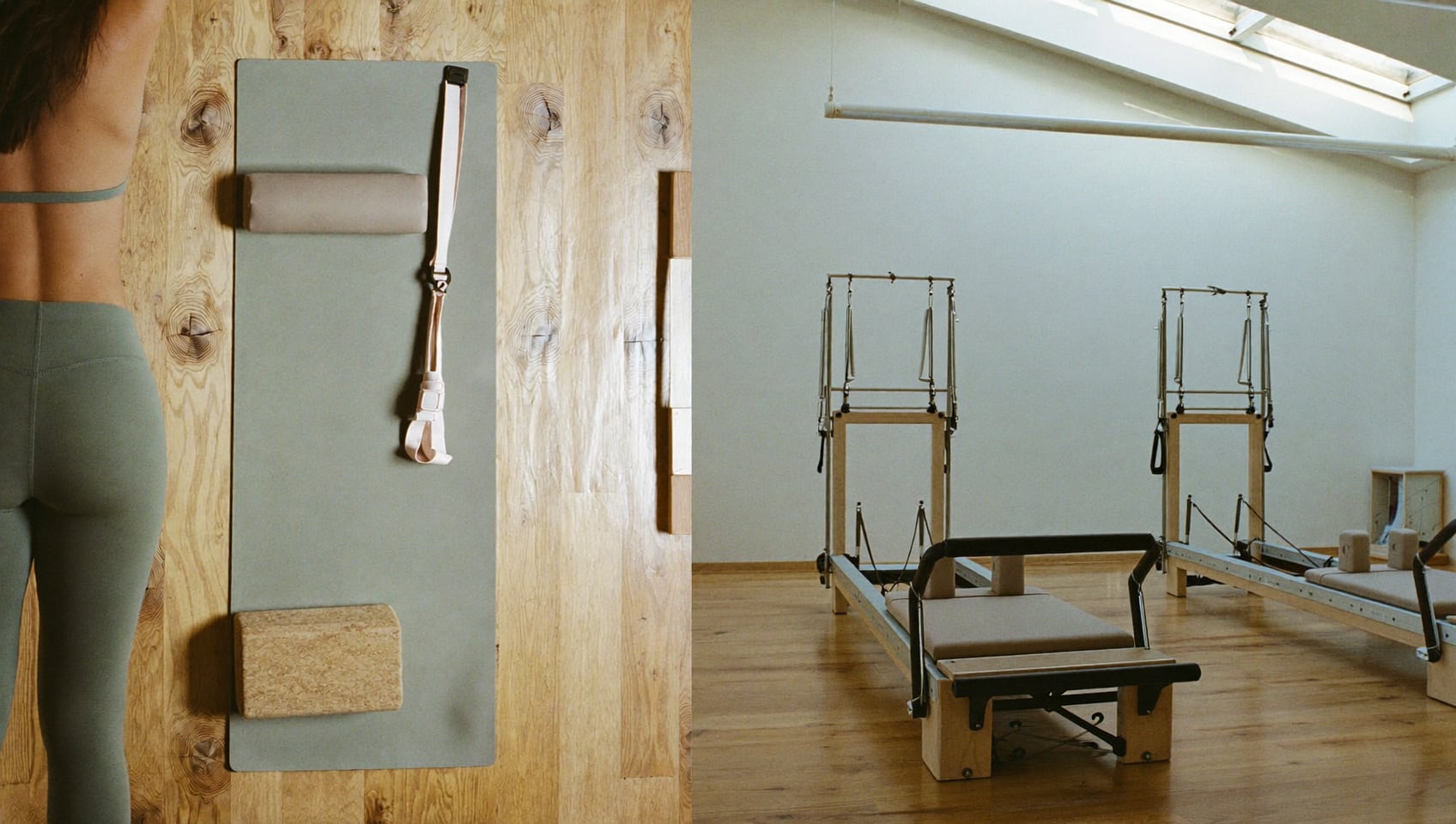
If you want to move more freely, ease tight hips or calm a busy head, start with yoga, ideally a slow, beginner-friendly class like Slow Hatha. If your goal is core strength, better posture or a back that complains less, start with reformer pilates, beginning with a class that teaches you the machine. And if you can't decide, you don't have to: plenty of beginners try both in their first week.
That's the short answer our front desk gives new students at Halden Studio on SE Division. Here's the longer, more honest version.
Should a beginner start with yoga or pilates?
Both build strength and both can ease aches. They just get there differently.
Yoga works mostly on mobility, balance and breath. You move through postures (called asana) linked to your breathing and hold them for several breaths at a time.
Pilates works mostly on core strength and control. Small, precise movements train the deep stabilizing muscles around your spine and pelvis.
So the useful question isn't "which one is easier?" It's "what do I want my body to do better a few months from now?"
What is a beginner yoga class actually like?
A good beginner yoga class is slower than most people expect. In Slow Hatha at Halden, postures are held longer, alignment is explained clearly, and props are everywhere: blocks, straps and bolsters, all provided. It's the class we recommend to anyone new to yoga or coming back after a break.
Once you're comfortable, Vinyasa Flow adds more movement: sun salutations, standing work, steady heat and a long, quiet savasana at the end. Yin & Restore goes the other way, with supported floor postures held for three to five minutes in low light.
Most people leave a yoga class calmer than they arrived. For many, that's the whole point.
What is a beginner reformer pilates class like?
The reformer can look intimidating. It's a sliding carriage with adjustable springs for resistance, plus straps and a footbar. Your first class is mostly about learning how it all works.
That's why every new reformer student at Halden starts with Reformer Foundations: a 50-minute class, capped at eight people, covering springs, straps, footbar setup and the core principles of pilates. After two or three Foundations classes, most students move comfortably into Reformer Strength.
What it feels like: slow, focused, surprisingly hard work with almost no impact on your joints. Don't be fooled by the small movements. Your glutes, back and deep core will notice by Thursday.
Prefer to skip the machine? Mat Pilates (45 minutes, all levels) uses small balls, rings and bands. It's precise and demanding, and it's portable: you can practice it at home.
Yoga vs reformer pilates for beginners: a side-by-side comparison
| Aspect | Yoga | Reformer pilates |
|---|---|---|
| Main focus | Mobility, balance and breath | Core strength and control |
| How it moves | Postures linked to breath, held for several breaths | Small, precise movements against spring resistance |
| Equipment | Mat, blocks, straps, bolsters | Reformer (sliding carriage, springs, straps, footbar) |
| Feels like | Flowing, full-body; ends calmer than it began | Slow, focused, surprisingly hard; very low impact |
| Often a good fit for | Tight hips and hamstrings, stress, runners and climbers | Back pain, posture, pre- and postnatal strength, returning from injury |
| Best first class at Halden | Slow Hatha (60 min) | Reformer Foundations (50 min, 8 max) |
Which is better for back pain, tight hips or stress?
There's no single right answer, but your starting point can follow your reason for coming.
If you sit at a desk all day
Yin & Restore was built with desk-worn hips in mind, and Slow Hatha gives stiff bodies time to settle into each posture. Pilates then strengthens the muscles that hold you upright. Desk workers often do well with one of each.
If you run, climb or cycle
Yoga is usually the better first step. It works on the range of motion that repetitive sports tend to take away.
If you have back pain or are coming back from injury
Pilates is a natural fit, because it trains the deep muscles around the spine and pelvis with very little load on the joints. If your injury is recent, check with your doctor or physical therapist first, then tell your teacher before class.
If you're pregnant or postnatal
Pilates is often recommended for pre- and postnatal strength. Talk to your healthcare provider, and let your teacher know so they can offer options throughout the class.
If stress is the main thing
Start with yoga. The breath-led pace is built to slow you down.
Is reformer pilates harder than yoga for beginners?
It's a different kind of hard. Reformer pilates has a learning curve in the first class or two, simply because you're getting to know the machine. Yoga's challenge tends to show up in holding a posture and breathing steadily through it.
Class size makes a big difference to either. At Halden, mat classes top out at 12 people and reformer classes at eight. Teachers walk the room, cue by name and offer modifications, so a first-timer and a ten-year practitioner can share the same hour without either feeling out of place.
Can I do yoga and pilates in the same week?
Yes, and it's what most of our members end up doing: typically two pilates classes and one or two yoga classes a week. Every Halden membership covers both, and reformer and mat classes count equally toward your monthly total.
A simple first week for a complete beginner might look like this:
- Reformer Foundations to learn the machine safely
- Slow Hatha for an unhurried introduction to yoga
- One more of your choice, such as Mat Pilates for core work or Yin & Restore for a recovery day
How to try both in Portland without committing
If you're still on the fence, the easiest move is to try both and let your body vote. At Halden:
- The intro offer is $45 for three classes in 14 days, yoga or reformer
- Memberships are month-to-month, from $119 a month, with no sign-up fee
- Drop-ins are $30 for mat classes and $38 for reformer
- After your intro, we'll suggest a plan if you'd like one, or you can simply walk away. There's no pressure at the desk.
The studio is on SE Division Street, with free street parking on the side streets, covered racks for 14 bikes and the FX2 Division bus a short walk away.
Ready to find out which one suits you? Request your intro class through our booking form, call (555) 010-2030 or email hello@example.com. We'll reply within one business day with class times that fit your week.
FAQ
Do I need to be flexible to start yoga?
No. Flexibility is something yoga builds, not something you need on day one. Beginner classes like Slow Hatha use longer holds, clear alignment cues and plenty of props, so blocks and straps bring the floor closer to you. Teachers offer modifications throughout, and nobody expects you to touch your toes.
Is reformer pilates safe for complete beginners?
Yes, when you start in a class built for beginners. At Halden, Reformer Foundations teaches the springs, straps and footbar in a group of no more than eight, and it's required before Reformer Strength. The work is low impact, and your teacher asks about injuries before class so they can offer options.
How many classes a week should a beginner take?
Two to three is a realistic start. Most Halden members settle into two pilates classes and one or two yoga classes a week, and twice a week is the rhythm where most members see real change in strength. If you run, cycle or lift, one or two classes alongside that works well.
What should I wear and bring to my first class?
Wear fitted clothing you can move in and bring water. Mats, blocks, straps and bolsters are provided. For reformer classes you'll need grip socks, which Halden sells at the front desk for $14. Arrive about 10 minutes early so your teacher can set up your space and ask about old injuries.